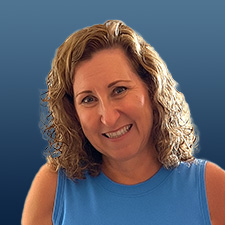
Barry Issenberg, M.D. ’95, appreciates how the Miller School encourages students to be innovative and take risks. Had it not been for that ethos, he would not be where he is today. Now chair of the Department of Medical Education, he also continues to serve as senior associate dean for research in medical education and director of the Gordon Center for Simulation and Innovation in Medical Education, a designated Center of Excellence at the Miller School.
For Dr. Issenberg, a defining moment came when he took a leave of absence between his second and third years of medical school to recover from back surgery before starting his clinical clerkships. During that time, he returned to the Gordon Center, where he had volunteered during high school. There, he worked with its founder, the late Michael S. Gordon, M.D., Ph.D., who revolutionized medical education by creating Harvey, the world’s first cardiopulmonary patient simulator. That experience with Dr. Gordon, helping to develop simulation tools, opened Dr. Issenberg’s eyes to a career in medical education.
“The Miller School encourages students to challenge the status quo; it encourages them to find their own path,” said Dr. Issenberg, who is also the Michael S. Gordon Endowed Chair of Medical Education. “I wouldn’t have been able to do what I’ve done in my own career if the Miller School hadn’t provided that opportunity to me as a medical student.”
“I am confident that under Dr. Issenberg’s leadership, the Department of Medical Education will continue along the path to success charted by Dr. Chandran.”
Henri R. Ford, M.D., M.H.A.

Taking the Reins
As endowed chair, Dr. Issenberg will build on decades of experience in educational innovation, technology-enhanced learning and curriculum development. He has helped integrate new technologies into medical education and played a key role in developing the Miller School’s NextGenMD curriculum. He succeeds Latha Chandran, M.D., M.P.H., MBA, founding chair of the Department of Medical Education, who now serves as director of Leadership Development Programs at the Miller School.
“When Dean Ford decided that he was going to start a Department of Medical Education, he invited me to chair the search committee,” Dr. Issenberg said. “I’ve had a close-up view of how the department was developed and worked closely with Dr. Chandran on its strategic vision. We’re ready to build on that foundation and take the next step forward.”
Looking ahead, Dr. Issenberg plans to strengthen the department’s role in educational scholarship, curricular innovation and faculty development while expanding its national and international visibility. The department is also expanding opportunities for fellows and visiting scholars. It welcomed its first Fulbright scholar in fall 2026.
“I am confident that under Dr. Issenberg’s leadership, the Department of Medical Education will continue along the path to success charted by Dr. Chandran,” said Henri R. Ford, M.D., M.H.A., dean and chief academic officer of the Miller School. “With Dr. Issenberg’s expertise as a world leader in simulation, we will continue to strengthen the Miller School’s position as a leader in medical education.”
For Dr. Issenberg, leading the department at the medical school where his own career in medical education first took shape represents both a full-circle moment and an opportunity to create the same possibilities for the next generation of Miller School students.
Paying Opportunity Forward
Dr. Issenberg received a tuition scholarship that helped open the door to his own medical education —an opportunity he has never forgotten. In gratitude, he established the Issenberg Family Endowed Medical Scholarship to give future generations of students the same chance to pursue their dreams of becoming physicians. His enduring commitment to medical education also includes support for the Class of ’95 Endowed Medical Scholarship.
The Miller Connection
Miller School alumni take the helm within the Office of Medical Education
Dr. Issenberg is privileged to serve alongside colleagues with deep roots at the Miller School. For the first time, all leadership positions within the office are held by Miller School graduates, bringing together a group united by shared experiences, lasting relationships and a deep appreciation for the history, culture and values that define the Miller School.
“Most of us graduated within about a decade of one another, so we share common experiences as students and trainees,” said Dr. Issenberg. “There’s a level of respect and trust that allows us to work more cohesively as a team.”
Click on the photos below to learn more about the alumni and their perspectives on this unique situation.
Amar Deshpande, M.D. ’02
Amar Deshpande, M.D. ’02
Hilit Mechaber, M.D. ’95, B.S. ’92
Hilit Mechaber, M.D. ’95, B.S. ’92
Gauri Agarwal, M.D. ’00, B.S. ’96
Gauri Agarwal, M.D. ’00, B.S. ’96
Sabrina Taldone, M.D. ’15, MBA ’15, B.S. ’10
Sabrina Taldone, M.D. ’15, MBA ’15, B.S. ’10
Sarah Bland, M.D. ’04, B.S. ’01
Sarah Bland, M.D. ’04, B.S. ’01
Zeina Hannoush, M.D., Residency ‘15, Fellowship ’17
Zeina Hannoush, M.D., Residency ‘15, Fellowship ’17

What does it mean to work with an all-alumni leadership team?
“It is an honor to work with colleagues who have similarly gone through medical school training at UM. I feel we all have a shared experience and common goals, which allows for efficient and effective dialogue as we discuss opportunities.”
Amar Deshpande, M.D. ’02
Senior Associate Dean for Education and Policy
Vice Chair for Education, Department of Medicine
Professor of Medicine (Gastroenterology) and Medical Education
Faculty Advisor, Mitchell Wolfson Sr. Department of Community Service (Wolfson DOCS)

What does it mean to work with an all-alumni leadership team?
“What I find most meaningful about this moment is the full-circle nature of it. At one time, each of us was a medical student being taught, mentored, challenged and supported by people who believed in us. Now, we are sitting together at the dean’s senior leadership table, responsible for helping create that experience for another generation. Our role is to preserve what is enduring and special about the Miller School of Medicine while continuing to ask how we can make the educational experience better for the students who are here now and those who will come after them.”
Hilit Mechaber, M.D. ’95, B.S. ’92
Senior Associate Dean for Student Affairs
Professor of Medical Education and Medicine

What does it mean to work with an all-alumni leadership team?
“There is something very meaningful about having been shaped by an institution and then being entrusted with helping shape its future. We have the privilege of guiding this particular chapter in the Miller School’s history. Our responsibility is to honor and preserve the values that have defined this school while also having the courage to challenge ourselves, embrace innovation and remain at the leading edge of medical education.”
Gauri Agarwal, M.D. ’00, B.S. ’96
Senior Associate Dean of Curriculum
Professor of Medicine and Medical Education
Professor of Informatics & Health Data Sciences

How do you think being a Miller School alum has prepared you for this leadership role?
“Having graduated from Miller School in 1997 and remaining as a resident, and then faculty, and now in medical education leadership, gives me a unique perspective on every stage of the academic journey at this institution. I’ve experienced the continuum. This helps me understand the unique needs of our learners, appreciate the challenges they face and make decisions to support them at every step.”
Yvonne Diaz, M.D. ’97
Associate Dean for Graduate Medical Education
Associate Professor of Clinical Medicine

How do you think being a Miller School alum has prepared you for this leadership role?
“I remember what it was like to learn medicine here, to train at Jackson and to develop my identity as a physician within this community. It helps me remain connected to the student experience even as medical education continues to change. I also think there is a value for students seeing alumni return as educators and leaders. It demonstrates that their relationship with Miller does not necessarily end at graduation.”
Vivian Obeso, M.D. ’00
Associate Dean for Continuing Medical Education
Associate Professor of Medical Education

How does your being a Miller School alum benefit current students?
“I have been a student through all levels of training at UM: undergraduate, medical school, MBA, residency, chief residency and faculty. This provides me with insights that I can share with senior leaders. I have a unique perspective to see the big picture and also zoom in at the granular level when it comes to curriculum design and our changing learning environment. I see how the lessons students are learning at each step in their training are meaningful in their educational journey.”
Sabrina Taldone, M.D. ’15, MBA ’15, B.S. ’10
Associate Dean for Clinical Affairs
Associate Professor of Clinical Medicine

What makes this situation so unique?
“The fact that so many of us chose to remain or ultimately return here speaks to the connection we feel to this institution. We are all grateful to be able to take what the Miller School gave to us and pay it forward. Each of us benefited from faculty members who invested deeply in our development, and now we have the opportunity and responsibility to do the same for our students.”
Sarah Bland, M.D. ’04, B.S. ’01
Assistant Dean for Curriculum
Assistant Professor, Departments of Medicine and Medical Education

How does your experience as a Miller School alum benefit current students?
As a Miller School alumnus, I have a firsthand appreciation for our culture of hard work, camaraderie, and putting the success of the group ahead of individual recognition. Our students train in a demanding clinical environment that emphasizes hands-on experience, teamwork, and service. Having shared that experience, I understand its challenges and strengths, which helps me connect with students, advocate for their needs, and preserve what makes our medical school special.
Chris Alabiad, M.D. ‘02
Associate Dean for Student Affairs
Professor of Clinical Ophthalmology

How do you think being a Miller School alum has prepared you for this leadership role?
“Over the years, I have grown personally and professionally at the University of Miami, and the University has grown in me. My journey from trainee to faculty member, and now educational leader, has been shaped by exceptional mentors who have inspired me, guided me and believed in me. I feel incredibly fortunate to now be in a position where I can pay that forward, supporting and mentoring the next generation of physicians at the medical student, resident and fellowship levels.”