Dissecting Our Cellular Power Plants

Dissecting Our Cellular Power Plants
Mitochondria are fascinating on virtually every level. As the organelles (specialized structures within a cell) that produce adenosine triphosphate (ATP), the cell’s primary energy currency, they are essential to survival. When a muscle twitches or a neuron fires, ATP is making that happen. Multicellular organisms simply do not exist without mitochondria.
Even more intriguing, mitochondria were once separate organisms. At some point, about 2 billion years ago, bacteria set up shop inside cells, creating a symbiotic relationship and eventually evolving into mitochondria. They have their own DNA, which cooperates with a cell’s nuclear DNA to make energy and produce more mitochondria (in a biogenesis process).
Mitochondria chug away unnoticed — until there’s some kind of problem. Mitochondrial disorders are severe hereditary syndromes associated with mutations in more than 300 genes. Researchers have also identified a variety of other conditions in which mitochondrial dysfunction plays a role, including certain types of diabetes, cardiovascular disorders, neurodegenerative diseases and many others.
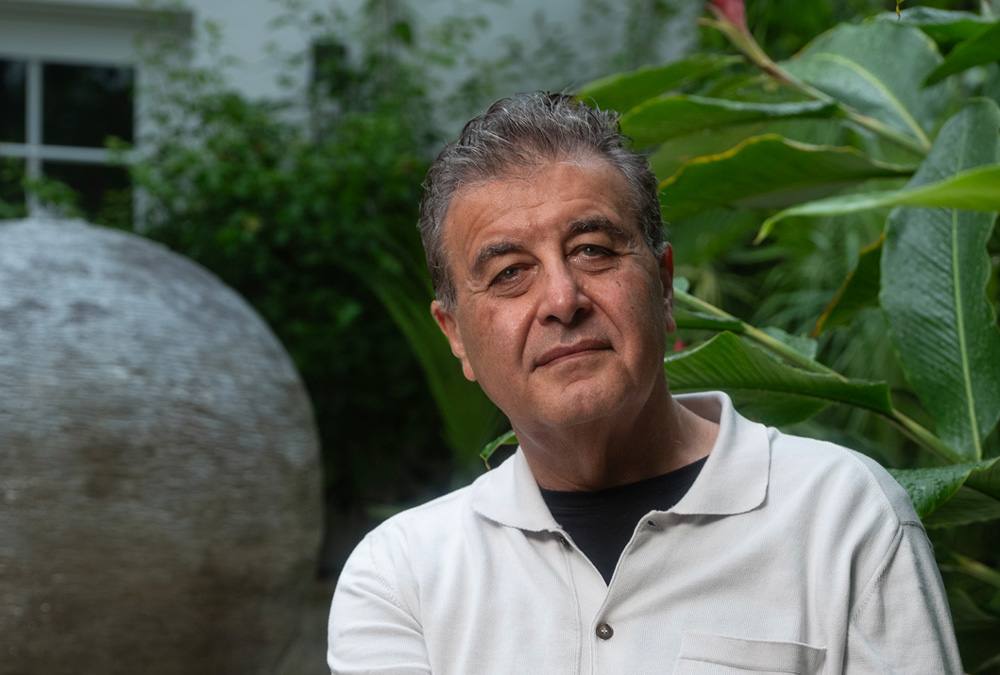
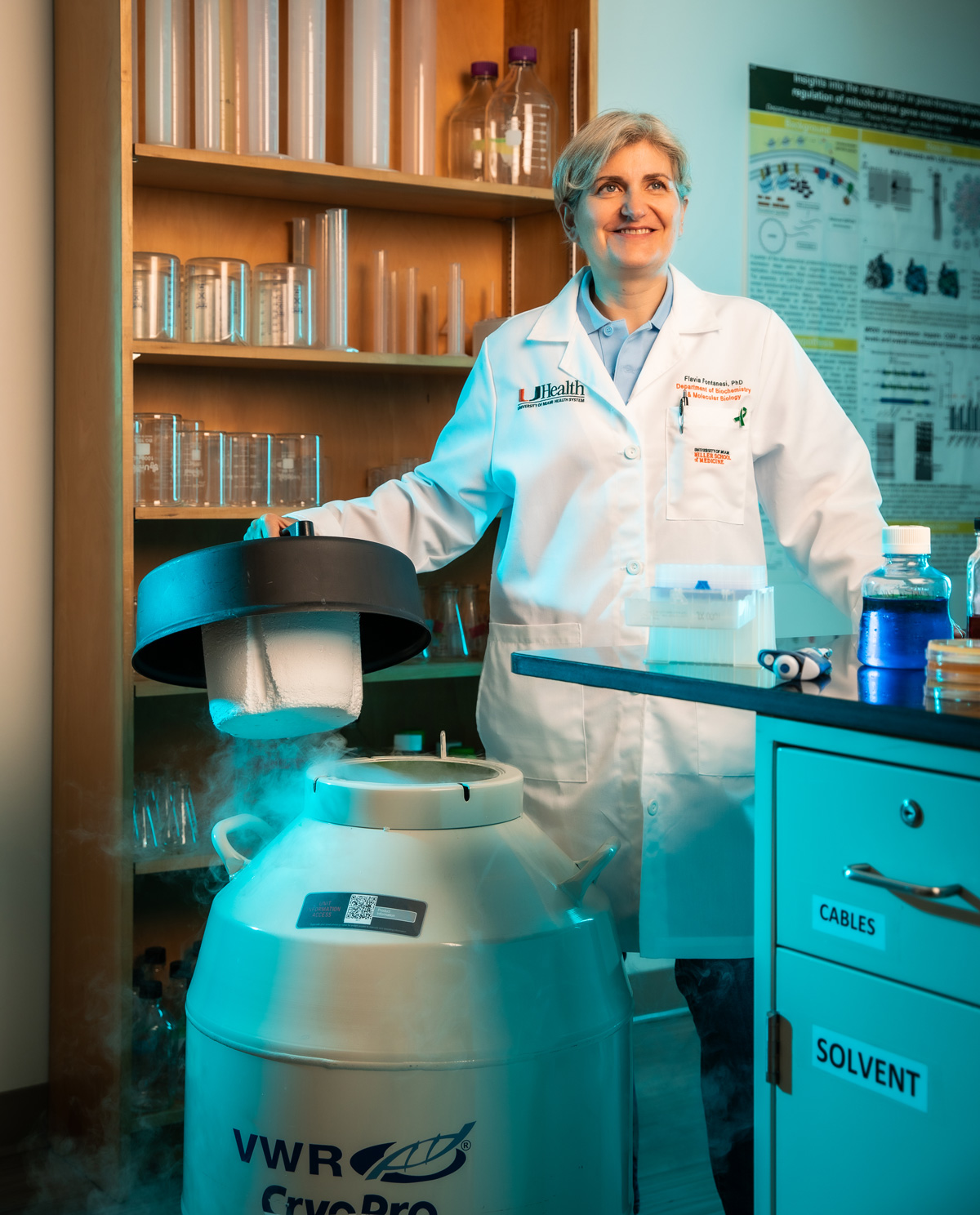
Flavia Fontanesi, Ph.D., Fellowship ’08, assistant professor of biochemistry and molecular biology, started investigating mitochondria when she was an undergraduate and continues to delve deeper into the field. Working with the model organism Saccharomyces cerevisiae (baker’s yeast), she wants to understand how these tiny power plants function.
“I am interested in the basic mechanistic processes that go on in mitochondria and govern their biogenesis,” Dr. Fontanesi said. “If we can understand how these processes work, perhaps we can develop new ways to fix them when there’s a problem.”
Learning From Yeast
Tools to manipulate mitochondria in human or other complex cells are limited and can cause unintended consequences. Yeast solves that problem. It’s is an excellent model organism because it’s simple, easy to work with and shares many genes with humans — a combination of traits that helps researchers dissect mitochondria’s inner workings. By controlling the formation of supercomplexes within yeast mitochondria, Dr. Fontanesi and her team can identify their functions.
“Yeast is so easy to manipulate genetically, and we can bioengineer strains to express only one way the respiratory chain can be organized,” Dr. Fontanesi explained. “In human cells, we have multiple variables we need to control, but in yeast, we can create a system that has only one variable.”
Dr. Fontanesi is particularly focused on the mitochondrial respiratory chain — the series of protein complexes (multiple proteins working together toward a common goal) that help produce ATP. These complexes associate with each other in structures called supercomplexes, whose function has been debated for a long time.
Through the painstaking process of manipulating yeast mitochondria, Dr. Fontanesi is illuminating how respiratory chain complexes and supercomplexes operate. Most important, she’s shown how they can shape-shift to adapt to use different food sources — a distinct survival advantage.
“Electrons can enter the respiratory chain at different points, depending on the metabolism,” she said. “If you eat a lot of fat or a lot of glucose, the mitochondria react differently based on these inputs. This setup is optimizing the cell’s metabolism based on the food source.”
“That excitement, the pure intrinsic value of new knowledge — it’s a powerful motivation.”
Flavia Fontanesi, Ph.D.
Understanding DNA Interplay
Dr. Fontanesi is also intrigued by the interplay between mitochondrial DNA and nuclear DNA. There are around 1,400 proteins in mitochondria, but only 13 are encoded by its DNA. All the others come from the cell nucleus.
This collaborative structure usually works flawlessly, assembling crucial enzymes with multiple proteins from different sources. There are cytosolic ribosomes, which translate nuclear RNA (transcribed from nuclear DNA) into proteins, as well as mitochondrial ribosomes, which perform the same function in mitochondria, yet have key structural differences.
Understanding these mechanisms could lead to new medicines, but it’s also a lot of fun. “You have a question you want to answer that nobody has answered before,” Dr. Fontanesi said. “And then you answer it, and for a time, you’re the only one who knows that small secret of nature. That excitement, the pure intrinsic value of new knowledge — it’s a powerful motivation.”
SHARE