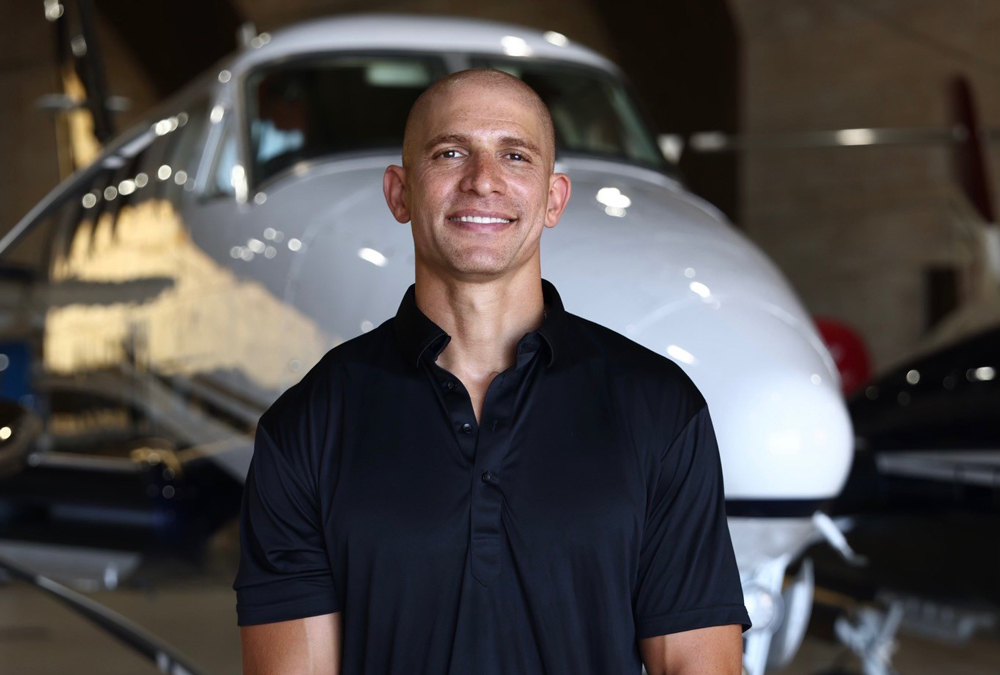
It’s been 40 years, and Marc Buoniconti still vividly recalls lying in a hospital bed after sustaining a spinal cord injury during a college football game. It had left him paralyzed from the shoulders down, unable to move, talk or breathe on his own, able to communicate only through his eyes, which said: “Dad, help me.”
At that moment, his father, Nick Buoniconti, a Pro Football Hall of Fame linebacker and two-time Super Bowl champion with the Miami Dolphins, made a promise to do everything in his power to help his son. That promise led to The Miami Project to Cure Paralysis, a Center of Excellence at the Miller School of Medicine.
“Little did we know that my father’s promise to me would transcend to a promise for millions of people and that The Miami Project would become the leader for spinal cord injury research — and also help other neurological conditions,” said Marc, who is president of The Miami Project and president and co-founder of The Buoniconti Fund to Cure Paralysis, a nonprofit that has raised more than $200 million in support of research, awareness and education since 1992.

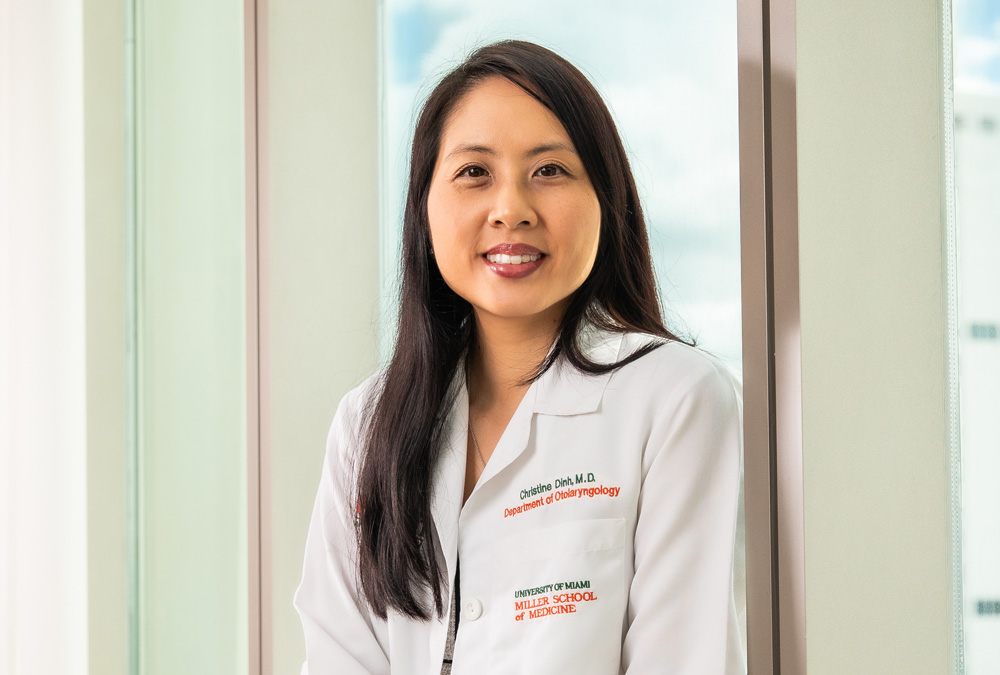
The Miami Project was jointly founded by Nick Buoniconti and the neurosurgeon who treated Marc — Barth A. Green, M.D., professor of neurological surgery and executive dean of global health and community service at the Miller School. It quickly established itself as a leading global center for neuroscience research. Over the past four decades, its team of scientists, researchers, clinicians and support staff has advanced scientific discovery and improved the quality of life of those suffering from spinal cord and brain injuries.
“We have tunnel vision in a way. We are focused forward,” Marc said. “My dad and Barth started The Miami Project solely based on hope, and that hope has transpired into pioneering translational research, moving basic science into clinical practice in the operating rooms.”
As an example of the innovative investigations being conducted, Marc cites the discovery that applying therapeutic hypothermia after spinal injury decreases inflammation within the spinal cord, dramatically increasing recovery. The Miami Project has been studying this for the past 20 years and is now leading a multicenter trial to prove clinical relevance — a necessary step before it can be implemented as a nationwide best practice.
“My dad and Barth started The Miami Project solely based on hope, and that hope has transpired into pioneering translational research.”
Marc Buoniconti
The Miami Project has also been an international leader in successful transplantation of stem cells, Schwann cells and peripheral nerve cells to help restore function. Miami Project investigators also recently implanted a brain-machine interface in a paralyzed patient as part of Neuralink’s PRIME (Precise Robotically Implanted Brain-Computer Interface) Study. It enables him to control external devices, like a phone or computer, using only his thoughts. Researchers are hopeful this work can be expanded to allow users to operate a wider range of devices that can improve function.
These examples just touch the surface of the impressive work researchers at The Miami Project are undertaking. Today, their scope of research extends far beyond spinal cord injury and includes neurological diseases and disorders such as Alzheimer’s disease, Parkinson’s disease, amyotrophic lateral sclerosis (ALS) and multiple sclerosis.
“We’ve come to understand that if you want to cure spinal cord injury, you have to be able to repair the brain because the brain controls the spinal cord,” Marc explained. “So, if we can learn to repair the nervous system, then we have an opportunity to make a difference in multiple neurological diseases.”
That prospect is exciting for Dr. Green, a neurosurgery pioneer who has dedicated his career to treating patients suffering from spinal cord injuries and neurological disorders.
“It is so rewarding to see the progress The Miami Project has made — largely due to the unwavering commitment of the Buonicontis — beginning with my shared vision with Nick to gather the finest minds in neuroscience in one institution and launch an all-out assault on spinal cord injuries,” said Dr. Green, who is also chair of The Miami Project. “Today, under the leadership of Marc, our mission has grown ever more clear — to repair the nervous system and restore function for hundreds of millions worldwide with neurological injuries and disorders.”
Marc believes his father would be proud to see how far The Miami Project has come, and he’s honored to continue that legacy, confident that one day they will discover the cure for paralysis.
“My vision is to continue to lead The Miami Project, to raise the bar, to attract new scientists, to expand our research, and to continue to raise the necessary funds to fulfill his promise to me and the promise I’ve made to all people living with a spinal cord injury,” Marc said. “I’ll never give up until we find a cure.”