Philanthropy Propels Early-Career Researchers

Philanthropy Propels Early-Career Researchers
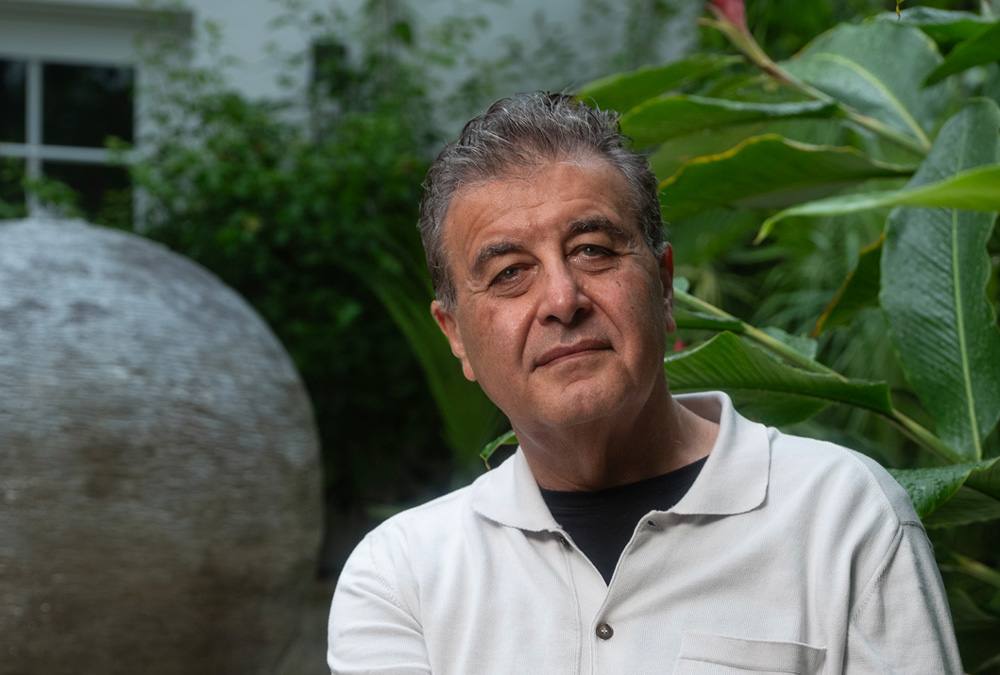
It has been 40 years since Jose Garcia, M.D. ’87, participated in Alzheimer’s disease research as a student at the Miller School of Medicine. The young investigator’s studies focused on serum neurotoxicity and the blood-brain barrier, an area that has interested him throughout his career.
Today, as chief executive officer of American Care Medical Centers, Dr. Garcia sees firsthand how Alzheimer’s disease affects a large sector of the aging population. In response, he established the Jose E. Garcia, M.D. ’87, Alzheimer’s Research Fund in the Miller School’s John P. Hussman Institute for Human Genomics (HIHG) in the Dr. John T. Macdonald Foundation Department of Human Genetics.
The substantial philanthropic gift supports a postdoctoral researcher and other research costs in the HIHG and is dedicated to continuing the investigations Dr. Garcia first conducted decades ago. He hopes that funding a postdoctoral associate focused on his foundational research will help facilitate discovery of the root cause of Alzheimer’s disease.

Funding Foundational Research
“Early career researchers are establishing the area in which they will become experts,” said Dr. Garcia, a longtime supporter of the Miller School and UHealth – University of Miami Health System. He is also the proud parent of Abraham Garcia, a Class of 2028 M.D. candidate, and Jose Pablo Garcia, M.D., an assistant professor of clinical rheumatology and immunology at the Miller School. “I hope that by funding these types of positions, young investigators will develop a passion for the cutting-edge research they are conducting, and they will dedicate a significant portion of their lives to this pursuit.”
Dr. Garcia allocated funding to the lab of Jeffery Vance, M.D., Ph.D., director of the HIHG Center for Genomic Education & Outreach, and Juan Young, Ph.D., co-director of the HIHG’s Center for Molecular Genetics. They run one of the leading research centers for Alzheimer’s disease in the country, and Dr. Garcia’s gift enabled them to hire postdoctoral associate Dhariyat Menendez-Lustri, Ph.D.
Dr. Menendez-Lustri is focused on experimental research to identify which blood serum components are neurotoxic to human neurons and whether there is a link between these toxic serum factors, a dysfunctional blood-brain barrier and Alzheimer’s disease pathogenesis.
“A lot of young investigators just came out of school, and we are still shaping ourselves and finding our footing. Having private philanthropy allows us to concentrate our efforts on conducting critical research,” Dr. Menendez-Lustri said. “Younger scientists have pressure to put out results and publish quickly, so they can build a repertoire to write grants. That can be overwhelming. I don’t feel that external pressure because of Dr. Garcia’s funding. I can do the science that needs to be done, as opposed to trying to generate results to further fund the project.”
“I hope that by funding these types of positions, young investigators will develop a passion for the cutting-edge research they are conducting.”
Jose Garcia, M.D.
Relieving External Pressure
This kind of postdoctoral research is like an apprenticeship, in which scientists learn the next steps toward independent research, explained Dr. Vance, who is also a professor of human genetics and neurology at the Miller School. “There is an old saying in the clinic in medical school: ‘See one, do one, teach one.’ It’s the same in research when working in an established lab,” he said. “We are providing guidance and mentorship as we cultivate the next generation of scientists.”
Besides helping jump-start careers, private philanthropic funding like Dr. Garcia’s gift allows early-career investigators to pursue more risky projects. High risk often comes with high reward.
“Private philanthropy allows the early investigator to tackle projects that might not be considered safe and therefore would never be funded otherwise,” said Dr. Young, who is also an associate professor of human genetics. “It also allows them to become more visible if the funds can be used to attend meetings or to publish research. Philanthropic funding is a valuable resource for career development, as it leads to visibility, networking and mentorship.”

SHARE