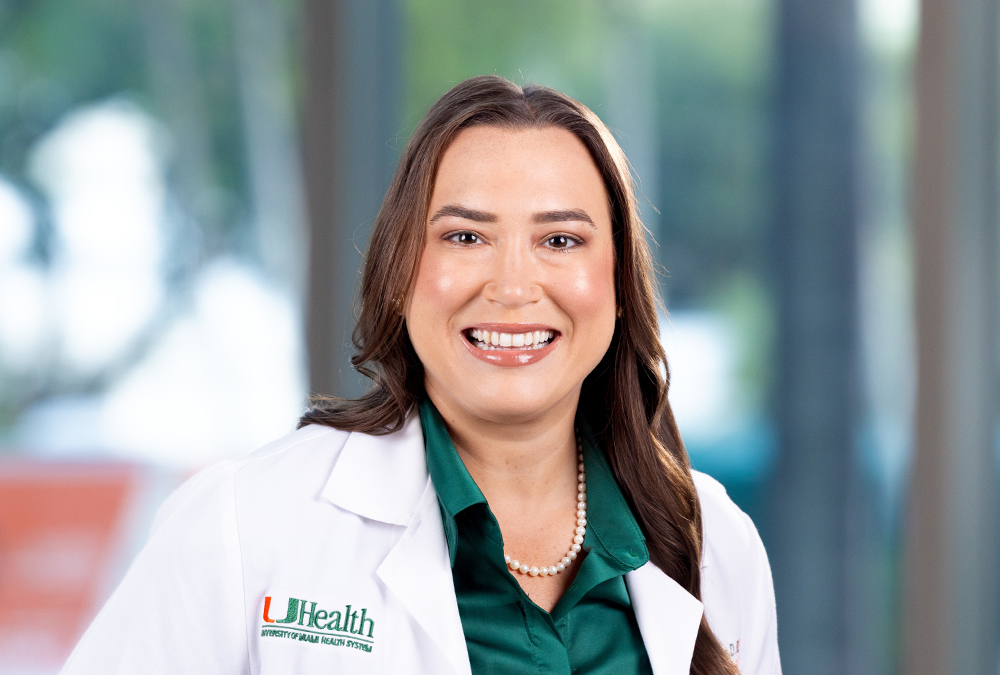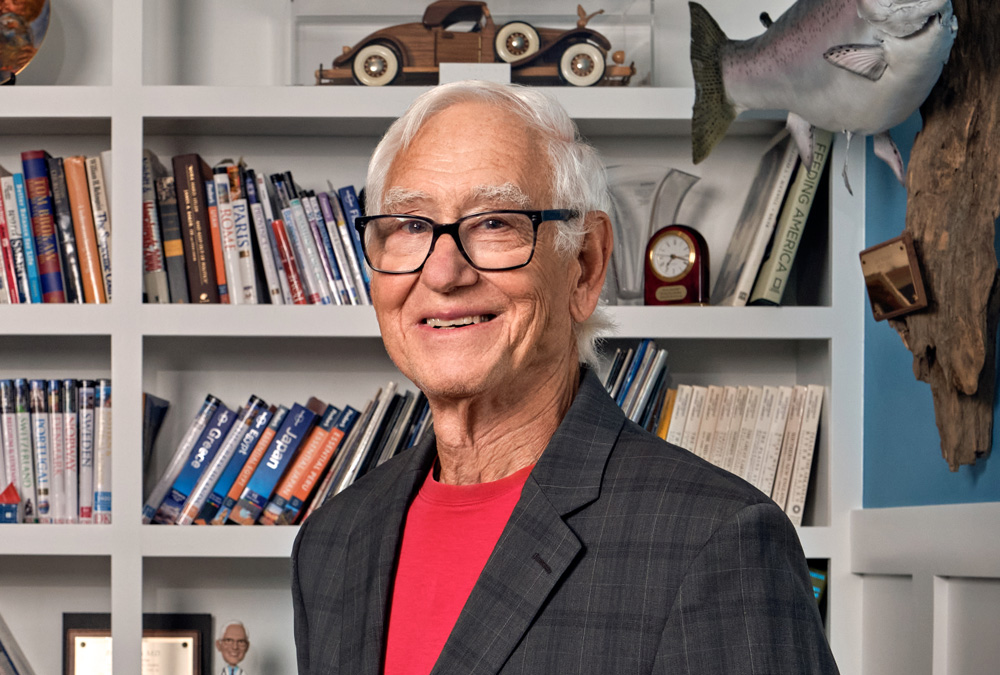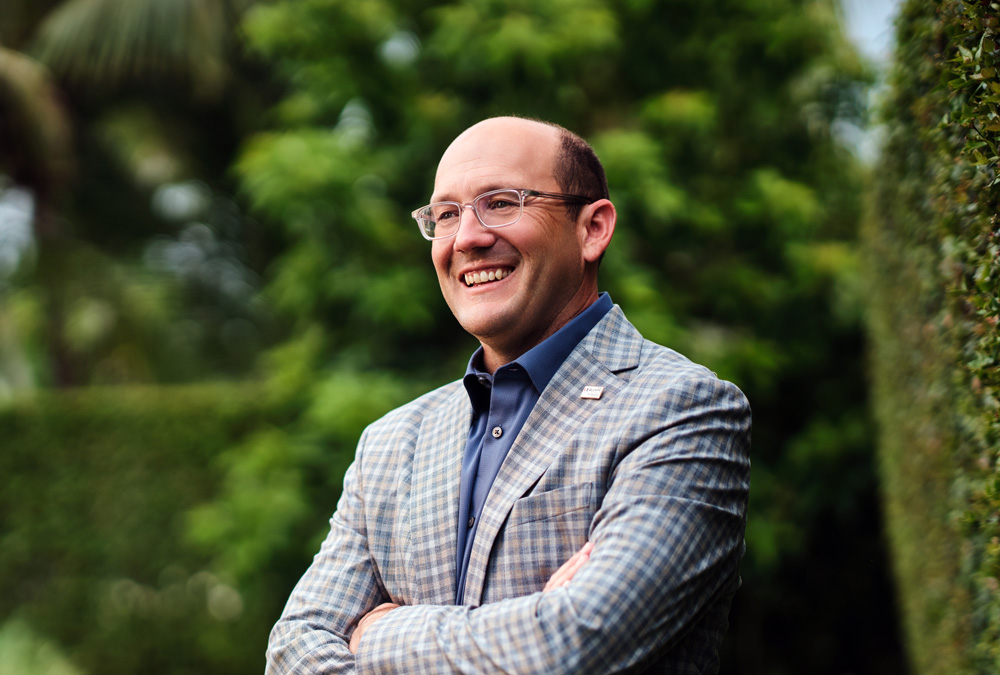
Twenty years ago, when neurologist and MS specialist Flavia Nelson, M.D., began working in multiple sclerosis research and care, an MS diagnosis meant preparing for an uncertain future. Many patients eventually faced significant disability. Today, the physician-scientists with UM’s Multiple Sclerosis Center of Excellence are dramatically changing that outlook with advanced imaging, earlier diagnosis, disease-modifying therapies and novel research options to treat those who don’t respond to available therapies.
Researchers at UHealth are leading two studies that may help even more people with MS and are led by Dr. Nelson, professor and chief of the Miller School Department of Neurology’s Multiple Sclerosis Division and the Thomas F. Whigham-Berger Chair in Neuroimmunology. The MS center is at the forefront of novel treatment modalities, including stem cell transplantation for secondary progressive MS and aggressive relapsing-remitting MS.

How Might Stem Cell Transplant Treat Multiple Sclerosis?
MS is an autoimmune disorder where the immune system that’s supposed to protect the body from bacteria and viruses attacks the body instead. The immune system mistakenly attacks myelin, the protective coating surrounding nerve fibers in the brain and spinal cord. As myelin becomes damaged, nerves can also be damaged and communication between the brain and the rest of the body slows or even stops altogether.
Autologous hematopoietic stem cell transplantation is an immune system “reset” that works very well in relapsing MS not responding to MS treatments. The process involves collecting a patient’s own hematopoietic (blood) stem cells, administering chemotherapy to eliminate much of the existing immune system and then reinfusing the stored stem cells to rebuild immune function.
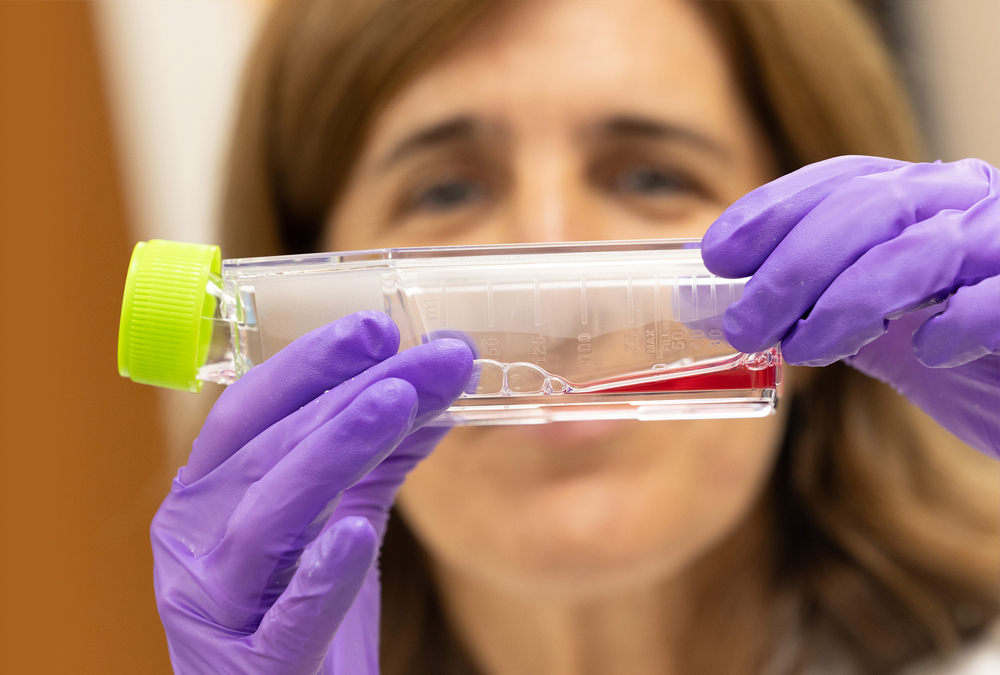
Cara Benjamin, Ph.D. assistant professor of clinical medicine, leads a tour of the Cell Therapy lab, where the stem cells are processed.
Diagnosing MS Early Leads to Better Outcomes
Because MS affects each person differently, it has long been one of the most challenging neurological conditions to diagnose. Today, doctors can diagnose MS earlier than ever. One of the most common early symptoms of an MS attack that affects 60% of people with the disease is optic neuritis, or inflammation of the optic nerve that causes vision loss.
“In the past, we had to wait for a second clinical attack before we could confirm the diagnosis,” Dr. Nelson says.
Now, for example, when neuro-ophthalmologists in the Bascom Palmer Eye Institute emergency department see a patient with vision loss in one eye, they perform a brain MRI to detect l lesions. “The MRI is key not only to diagnose MS, but to monitor it because lesions can show up silently without causing symptoms, while the disease is progressing in the background,” says Dr. Nelson.
Earlier diagnosis gives patients time to prevent additional damage from MS.
“In the past, we had to wait for a second clinical attack before we could confirm the diagnosis.”
Flavia Nelson, M.D.
Treating MS Early Matters
The most common form of the disease, relapsing-remitting MS, causes episodes of neurological symptoms due to the immune system attacks on the nervous system, these are followed by periods of recovery and disease stability. Early in the disease, patients feel almost completely normal after an attack, making it easy to believe the disease has gone away.
Without treatment, these repeated attacks can eventually overwhelm the brain’s ability to repair itself. Over time, some patients transition to secondary progressive MS, a stage marked by steadily worsening neurological disability rather than distinct relapses.
Walking often becomes increasingly difficult as the disease progresses.
“Our body is very good at healing, but if you expose the brain to injury after injury, at some point it’s not going to be able to heal itself,” says Dr. Nelson.
Preventing that progression has become one of the biggest goals in modern MS care.
How a Miller School Neurologist Became a World-Renowned MS Researcher
Dr. Nelson’s interest in neurology began in medical school at the University of Chihuahua, School of Medicine in Mexico, where she became fascinated by the brain. “I remember my professor saying the brain is the only organ that can’t regenerate itself, and I thought that cannot be true. And now we know it’s not,” she says.
She had planned to become an expert in stroke but became passionate about MS research when she began working with an expert in the field. “I fell in love with MS patients. They’re young, mostly women, and they needed more support. The patients are truly inspiring. They didn’t do anything to deserve this disease. They fight hard to maintain their function and are truly special,” she says.
In 2004, when Dr. Nelson started her fellowship at the Texas Medical Center, there were only 17 MS fellows in the country. “Over the past 20 years, research in the MS field has exploded in areas of diagnosis, monitoring, imaging and treatments where it went from 5 to currently 27 FDA approved medications. Additionally, the entire field of neurology eventually benefited from the advances in imaging in our field,” she says.
Research to Reverse Secondary Progressive MS
Today, fewer people diagnosed early develop progressive MS or will experience the severe disability that we see in patients diagnosed 20-40 years ago.
However, people currently with secondary progressive MS have limited treatment options. For these patients, the next frontier in MS research is finding ways to repair the damaged nervous system, and intrathecal stem cell trials have shown promising results.
Dr. Nelson is serving as the principal investigator at the University of Miami Miller School of Medicine for NeuroGenesis NG01, a first-of-its-kind, multi-center, international Phase 2b clinical trial evaluating intrathecal stem cell therapy for people with secondary progressive MS.
The novel technology begins with stem cells collected from the patient’s bone marrow. The cells are expanded in a laboratory and then injected back into the spinal fluid, allowing them to circulate throughout the brain and spinal cord, with the goal to promote regeneration and repair in damaged areas of the brain and spinal cord. “We need to focus on slowing MS progression, but we also need to focus on how we can regenerate and repair the brain,” says Dr. Nelson.
The research is generously supported by the family of Miami native and Indiana University’s star quarterback, Fernando Mendoza. Inspired by Mendoza’s mother, Elsa, the Mendoza Family Foundation is helping rewrite what’s possible for people with MS) everywhere. On the very day of the NFL draft, the Mendoza’s announced a partnership with the National Multiple Sclerosis Society along with a $500,000 gift to support Dr. Nelson’s groundbreaking research at the University of Miami Middle School of Medicine.
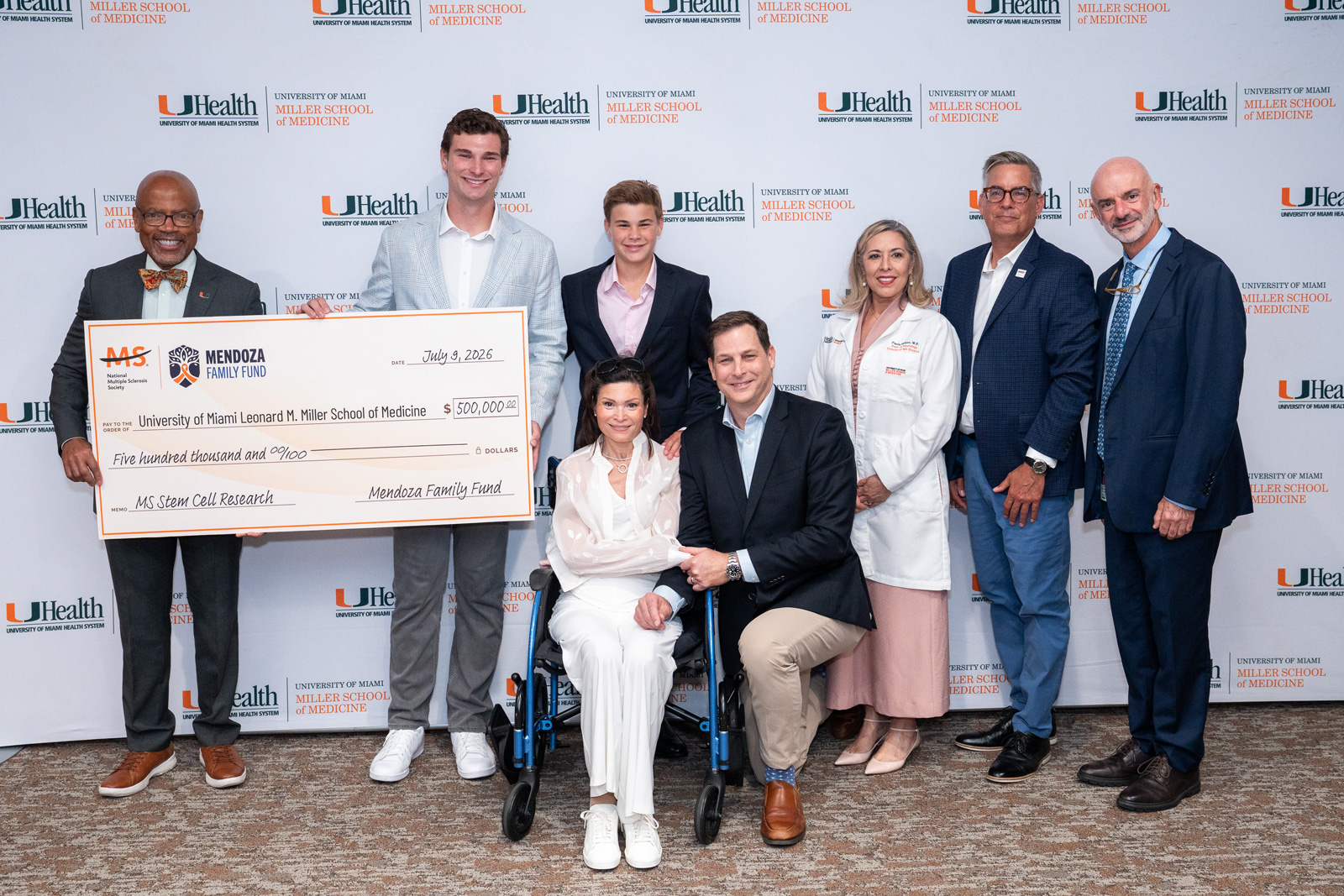
Funding will directly support regenerative stem cell transplantation research for patients with relapsing progressive MS, who have long lacked effective treatment options.
Previous studies by NeuroGenesis Israel suggest the NG01 therapy may improve neurological function in some patients with secondary progressive MS. The investigational therapy was developed by the biotechnology company NeuroGenesis and builds on earlier clinical research conducted at Hadassah Medical Center in Jerusalem. Encouraging results from those studies paved the way for the clinical trial now available in the United States. In addition to the University of Miami, the new multicenter clinical trial at New York University (NYU), Massachusetts General Hospital, Harvard Medical School, NYU Langon, Cedar’s Sinai, University of Southern California, (USC) and two sites in Israel will evaluate whether those findings can be confirmed in a larger group of patients.
Researchers will measure walking ability, MRI changes and biological markers to determine how the therapy affects the nervous system. This trial will be done in collaboration with Dr. Denise Pereira, a stem cell transplant expert from Sylvester Comprehensive Cancer Center, a part of UHealth and South Florida’s only NCI-designated Cancer Center.
“There’s a critical, unmet need for therapies that focus on restoring function to people with secondary progressive multiple sclerosis. The success of this trial will allow us to eventually make this treatment available to everyone,” says Dr. Nelson.


Researching treatment for aggressive relapsing-remitting MS
For most people with MS, existing therapies work to prevent nerve damage. However, for a subset of patients with highly active, relapsing MS, disease activity continues despite treatment with high-efficacy therapies.
Dr. Nelson and her team are exploring whether regenerative stem cell therapy can help people living with relapsing-remitting multiple sclerosis (RRMS) that no longer responds to standard therapies.
The MS transplant program in collaboration with cell therapy expert Dr. Amer Beitinjaneh, from the Sylvester Cancer Center, reached a historic milestone in December 2025 when the team performed the first hematopoietic stem cell transplant in an MS patient in Florida as part of the Beat MS trial for relapsing MS.
More Hope for Those with MS
There’s still no cure for multiple sclerosis, but diagnosis today comes with far more hope than it did when Dr. Nelson entered the field in 2004. Earlier diagnosis, more effective therapies and personalized care are helping people maintain their independence longer than ever before. Thanks to support from the Mendoza Family Foundation, research into regenerative medicine is opening new possibilities for treating progressive forms of the disease that have long been the greatest challenge.
At the time Mendoza became the first Cuban American to win the 2025 Heisman Trophy, he took a moment to thank his mother, Elsa. “You taught me that toughness doesn’t need to be loud. It can be quiet and strong. It’s choosing hope. It’s believing in yourself when the world doesn’t give you much reason to. Together, you and I are rewriting what people think is possible.”
Elsa Mendoza’s smile from the football stands has given a face to people living with MS. Now that her son captured the hearts and minds of college football fans everywhere, the family’s contribution to help change the progression of MS means their legacy extends far beyond the football field.
The Beat-MS Trial
The Beat-MS Trial (Best Available Therapy versus Autologous Hematopoietic Stem Cell Transplant for Multiple Sclerosis) is a multicenter phase III clinical trial currently underway at the University of Miami Miller School of Medicine. The study will determine whether autologous hematopoietic stem cell transplantation (AHSCT) can provide better long-term disease control than the best currently available FDA-approved therapies for people with treatment‑resistant relapsing‑remitting multiple sclerosis (RRMS).