Targeting Deadly Brain Tumors

Targeting Deadly Brain Tumors
On the surface, science can seem dry and technical — jargon-filled papers that only a handful of people can understand. But dig a little deeper, and you’ll find that many researchers have personal stakes in their work.
“My desire to do something about cancer started with a loss I experienced when I was 10,” said Defne Bayik, Ph.D., assistant professor of molecular and cellular pharmacology and a researcher at Sylvester Comprehensive Cancer Center. “From that moment, I knew the treatments we had were not good enough. I wanted to figure out how we could move the goalposts so people don’t lose their loved ones from cancer.”
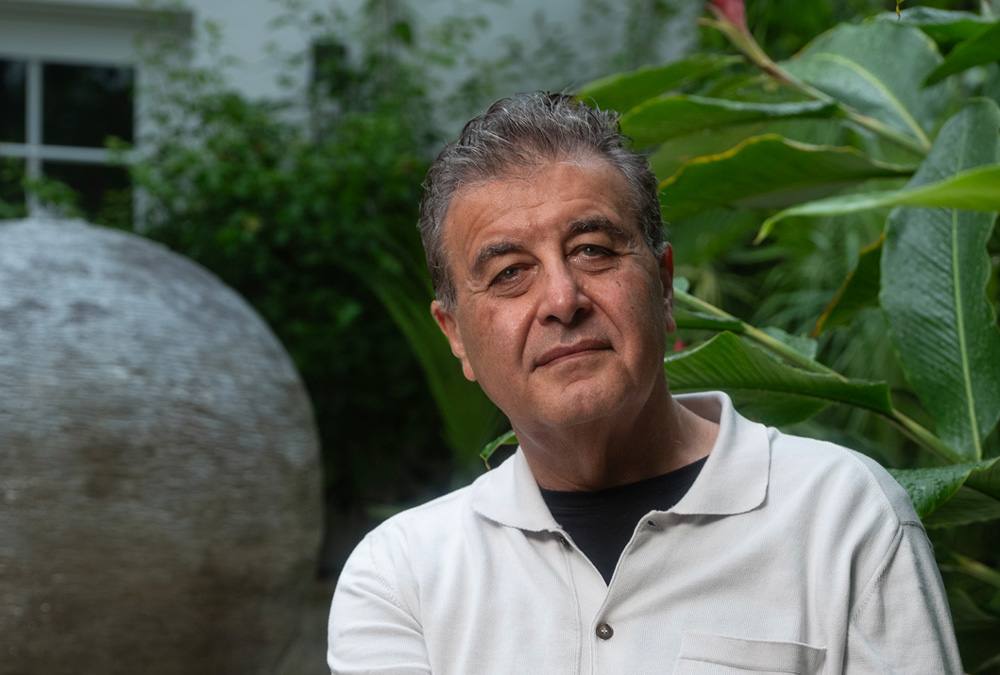
Dr. Bayik works closely with her husband, Dionysios Watson, M.D., Ph.D., to interrogate the most common and lethal adult brain tumor: glioblastoma. Even with the most aggressive treatments, glioblastoma patients survive, on average, for only around 15 months after diagnosis.
Drs. Bayik and Watson want to change that, and they’re making significant progress. Their strategy is to enlist astrocytes (a broad category of cells found in the brain and spinal cord), macrophages (part of the immune system) and neural cells to weaken brain tumors and ultimately kill them.

Localizing Immunotherapies
Immunotherapies, such as immune checkpoint inhibitors and CAR T-cell therapies, can be game changers for some cancer patients; however, they’ve been mostly ineffective against brain tumors. This is not entirely a surprise: Checkpoint inhibitors work by boosting the immune response of T cells, and there aren’t many T cells in the brain. To overcome this challenge, the pair is working on localized immune-based approaches.
“Rather than giving immune therapies and expecting whole-body immune activation to affect a brain tumor, we’re developing therapies that specifically target cancer cells,” said Dr. Watson, an assistant professor of medical oncology and a Sylvester researcher. “We want to generate a concentrated effect at the tumor to locally supercharge anticancer immunity.”
To accomplish this, they are harnessing cytokines, which are signaling molecules that activate an immune response. Engineered cytokines that attach to tumor cells could act as beacons to attract nearby immune cells.
Another approach specifically targets immune cells that are already abundant in the brain: macrophages and other myeloid cells. Glioblastomas are well-known for their ability to retask these immune components to further tumor growth and treatment resistance. Drs. Watson and Bayik want to reverse that process.
“We’re using pieces of bacteria to activate myeloid cells,” Dr. Watson said. “These immune cells have evolved to recognize bacterial components, so we’re harnessing that property to turn on these cells in brain tumors.”
“The reason we can’t make better drugs against glioblastomas, and outcomes are so poor, is that we just don’t know enough about how they function.”
Dionysios Watson, M.D., Ph.D.
Interrogating Tumor Microenvironments
Tumors create a protective zone around themselves, called a tumor microenvironment. This zone subverts immune and other cells, including getting myeloid cells to switch teams. Understanding this microenvironment could reveal an array of therapeutic targets. “We want to know how cancer cells physically connect with the brain,” Dr. Bayik said. “Once we know how that happens, we have potential drug targets, and we can develop agents that block those connections.”
In a groundbreaking study, Drs. Bayik and Watson and colleagues around the world showed that glioblastoma cells steal energy-producing mitochondria from neighboring astrocytes to fuel their growth. Blocking this interaction could potentially starve tumors.
Drs. Bayik and Watson seek to understanding the many nuances associated with brain tumors, such as how glioblastomas affect men and women differently. By revealing the mechanisms that make these cancers tick, they give researchers better tools to develop new therapies.
“The reason we can’t make better drugs against glioblastomas, and outcomes are so poor, is that we just don’t know enough about how they function,” Dr. Watson said. “It is absolutely essential to have that fundamental knowledge. Otherwise, it will be virtually impossible to develop the drugs we need to take out these tumors.”
SHARE