Just beyond Miami’s shimmering coastline, scientists are charting a course that could redefine human health. At the intersection of marine biology and oncology, collaborations between Sylvester Comprehensive Cancer Center and UM’s Rosenstiel School of Marine, Atmospheric and Earth Science are turning the ocean into a living laboratory and launchpad for innovation.
For decades, researchers have looked beneath the surface of the ocean for answers. But now, a new arm of the Rosenstiel School — the Glassell Family Center for Marine Biomedicine — is bringing scientists together in teams to do deep dives that probe beneath the ocean’s surface for clues about cancer.
The Damselfish and Cancer
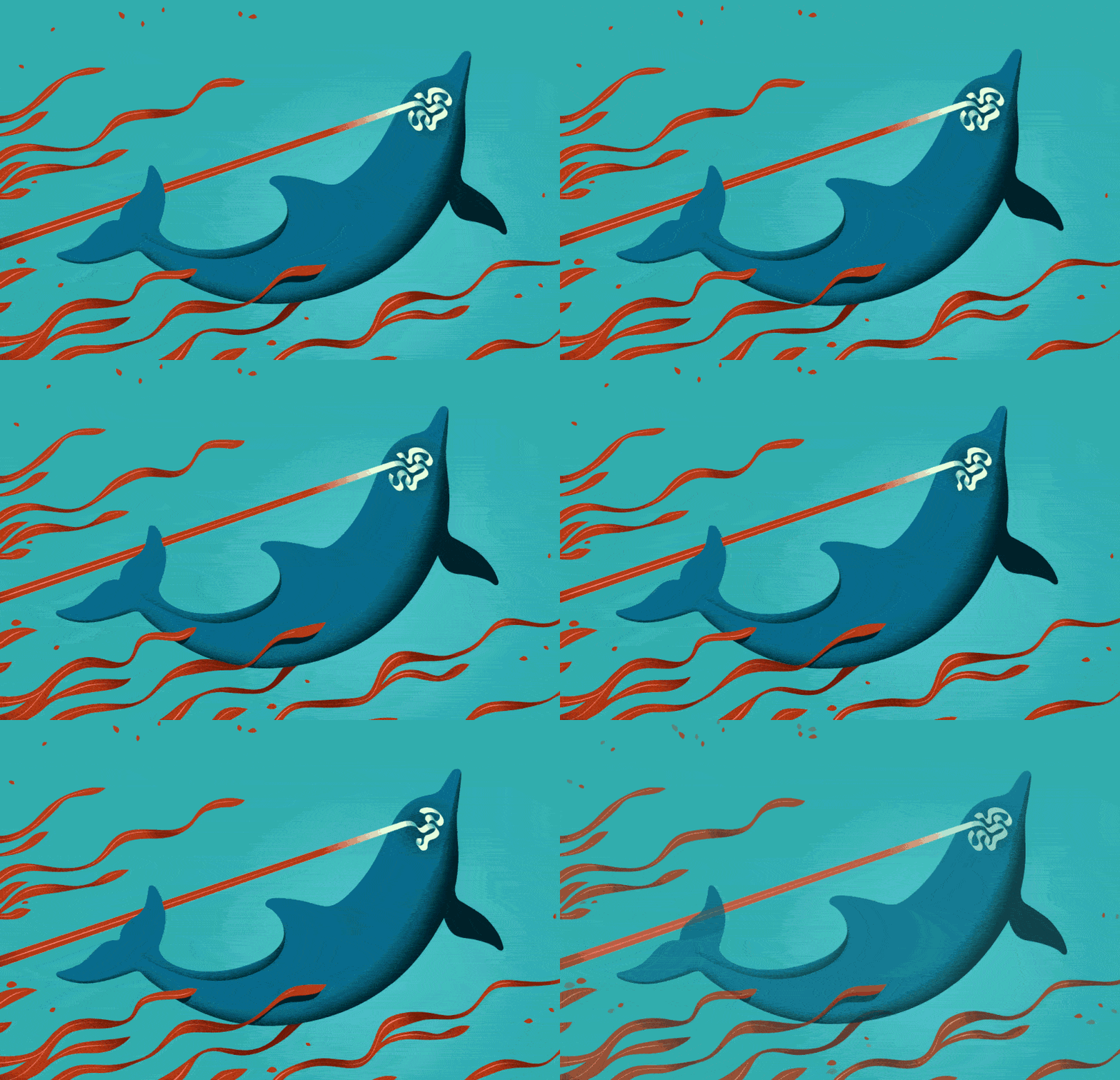
The damselfish is a tropical species common to South Florida reefs. Within its cells lies a mystery that could illuminate cancer’s darkest corners. These fish frequently become sick with a cancer that causes nerve sheath tumors and skin lesions.
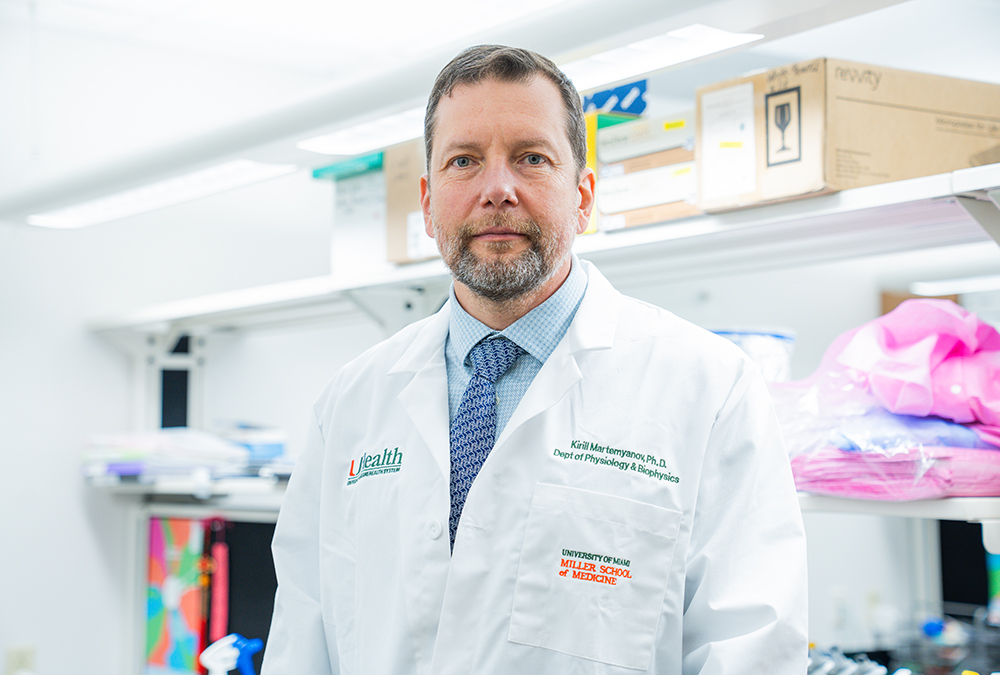
“I’ve been working with this animal model system for my whole career. I basically discovered it when I was doing my Ph.D. dissertation,” said Michael Schmale, Ph.D., a professor of marine biology and ecology at the Rosenstiel School. “It took years to realize the tumors were caused by a transmissible pathogen — an agent that moves from fish to fish, both in the wild and in the lab.”
What makes this pathogen extraordinary is its hideout: cell mitochondria. “No animal virus has ever been seen replicating inside mitochondria,” Dr. Schmale explained. While there have been numerous studies of the roles of mitochondria in cancer, existing models haven’t determined how changes in mitochondria might initiate cancer formation.
Cracking Cancer’s Metabolic Code
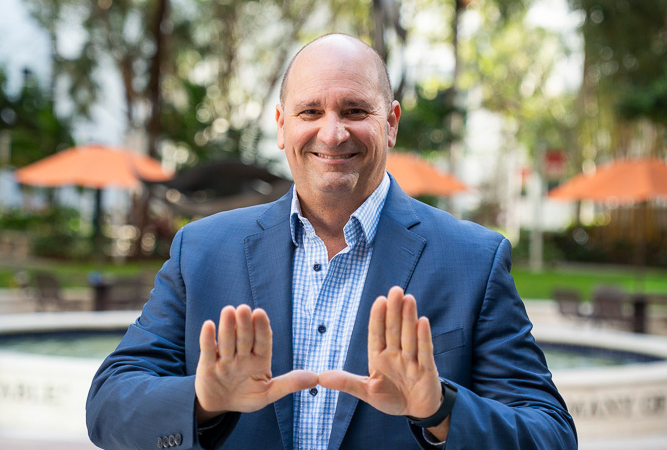
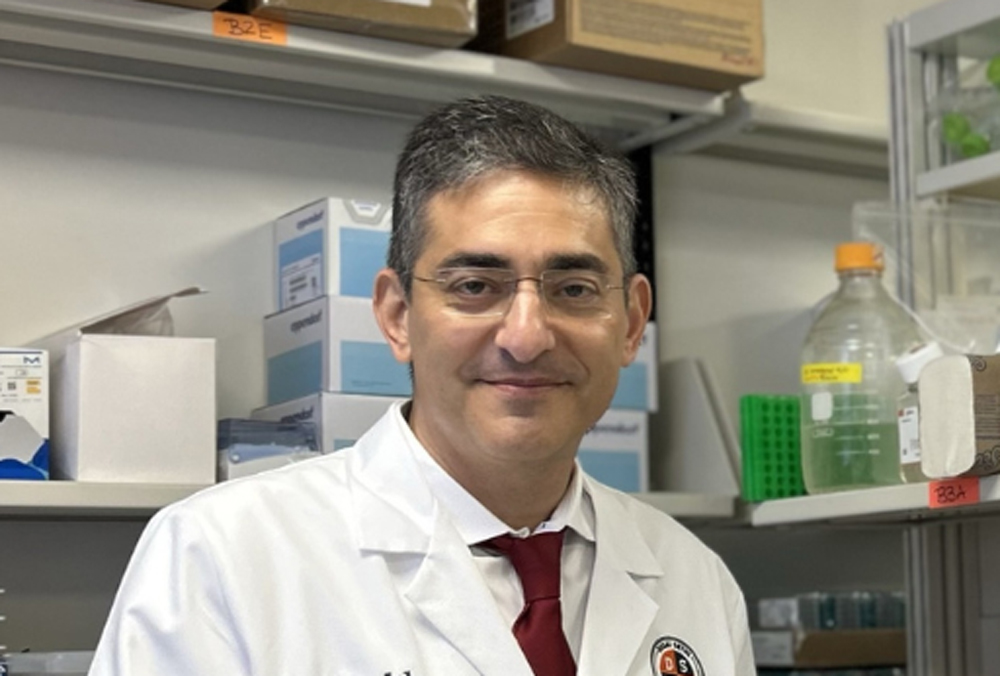
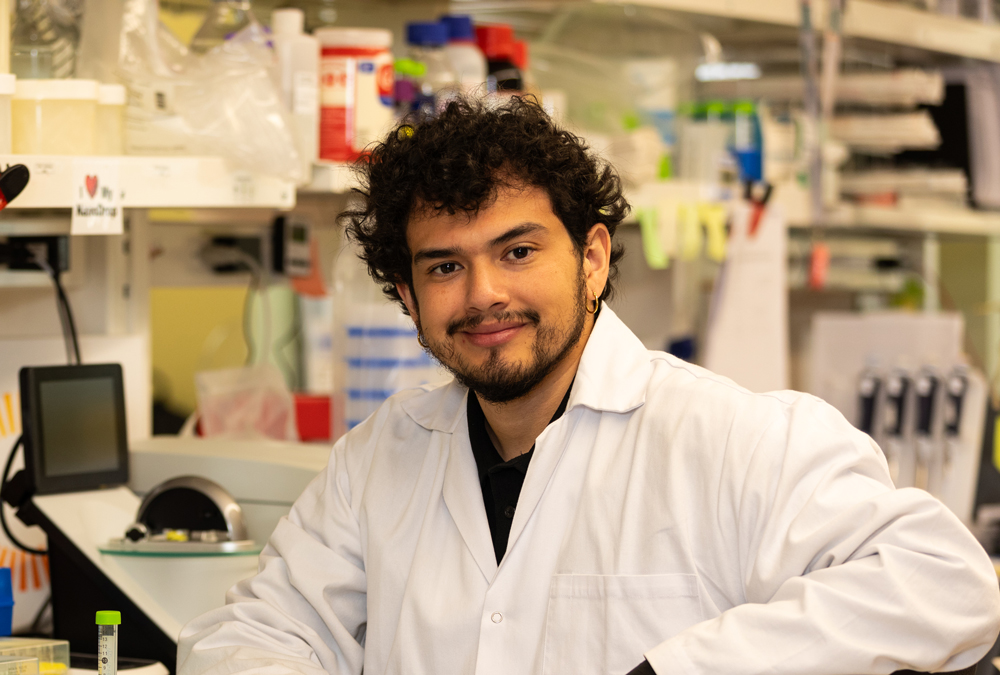
Enter cancer metabolism expert David Lombard, M.D., Ph.D., a professor of a professor of pathology and laboratory medicine and Sylvester’s vice chair of clinical and translational research. He and Dr. Schmale met at a scientific retreat hosted by the Glassell Family Center and Sylvester, where they realized their research intersected.
“What we had been focusing on, in terms of metabolic changes in the mitochondria, were right up David’s alley,” Dr. Schmale said. “And they were in an area where we had hit a complete roadblock because we don’t have any of the technology necessary to do the kind of metabolic studies that David does on a regular basis.”
Dr. Lombard’s lab uses a mass spectrometer that can map hundreds of metabolites in a single tissue sample.
“The time is long past where major advances come from scientists working in silos,” said Dr. Lombard. “Science has become so specialized and knowledge has expanded so much that advances really require teams of people with complementary expertise who approach problems from very different perspectives. I think the collaboration that Dr. Schmale and I have is a great example of that.”
“Science has become so specialized and knowledge has expanded so much that advances really require teams of people with complementary expertise who approach problems from very different perspectives.”
David Lombard, M.D., Ph.D.
Cancer in the Lab
Dr. Lombard, who is co-leader of Sylvester’s Cancer Epigenetics Program, studies the connections between the epigenome and metabolism — the way genes get turned on and off in cells and how the output of those processes can result in cancer and aging.
“We’re constantly looking for new Achilles’ heels and new therapeutic vulnerabilities to exploit for cancer treatment,” Dr. Lombard said, adding that the damselfish model is a “wonderful” system for that purpose.
Major advances often arise from basic organisms. Dr. Lombard pointed out that the essence of what we know about how cells choose to divide comes from studies on yeast conducted a long time ago. That understanding led to a whole class of cancer medicines.
“When you pursue basic knowledge in model organisms, you never really know what you might get out of it,” he added. “But sometimes it’s just dynamite and world-changing,”
Dr. Schmale’s damselfish research revealed a paradox. In the fish tumors, mitochondrial metabolism is suppressed. If mitochondria are trashed, cancer shouldn’t thrive. Yet, it does. “That contradiction could reveal vulnerabilities we’ve never considered,” Dr. Lombard said.
Three Pillars Linking Ocean and Health
The collaborative work of Dr. Lombard and Dr. Schmale rests on three pillars:
- Animal models: Marine species as mirrors for human disease.
- Remedies from the sea: Sponges and algae yielding compounds for cancer drugs.
- Hazards from the sea: Toxins like red tide that may contribute to cancer or other illnesses.
The ocean offers models and possibilities for lifesaving medicines, as well as critical early warnings.
For example, Giant marine viruses — genomic leviathans when compared to other viruses — may hold clues to gene transfer and cancer evolution. Or consider the sea slug Aplysia, of which the Rosenstiel School is the largest worldwide resource. Specimens supplied by the Rosenstiel School were crucial to Nobel Prize-winning research into memory; the slug now serves as a model for Alzheimer’s disease and stroke survival in humans.
Ocean research is also inspiring new ways to think about burn treatments and wound healing as researchers examine how anemones regenerate without scars. Other research is looking into cobia, a fish that has high lipid and fat contents that are ideal for those healing from cancer treatment. It’s already being used to feed UM’s student athletes in the athletic dining hall.
Rewriting the Script of Biomedical Research
For this kind of research, proximity matters. From Rosenstiel’s dock, Dr. Schmale can collect damselfish via a 20-minute boat ride. But location alone doesn’t fuel discovery. For Dr. Lombard, the work is early-stage, aspirational and urgently in need of funding. Grant applications have been submitted, but philanthropy could accelerate progress.
From the damselfish’s mitochondria to the ocean’s vast genetic vault and environment, UM scientists are rewriting the script of biomedical research. The answers to treating cancer and neurodegeneration may not lie in a petri dish alone. They may be swimming beneath the waves where we live.