Immune Cells and Heart Failure

Immune Cells and Heart Failure
New research, at the Miller School and elsewhere, is delineating how the immune system contributes to heart failure. During a heart attack, immune cells enter the heart and repair the damage. Without this intervention, the heart could rupture. But unfortunately, these immune cells don’t know when to leave. This means that an immune response to heal the heart results in heart failure later on.
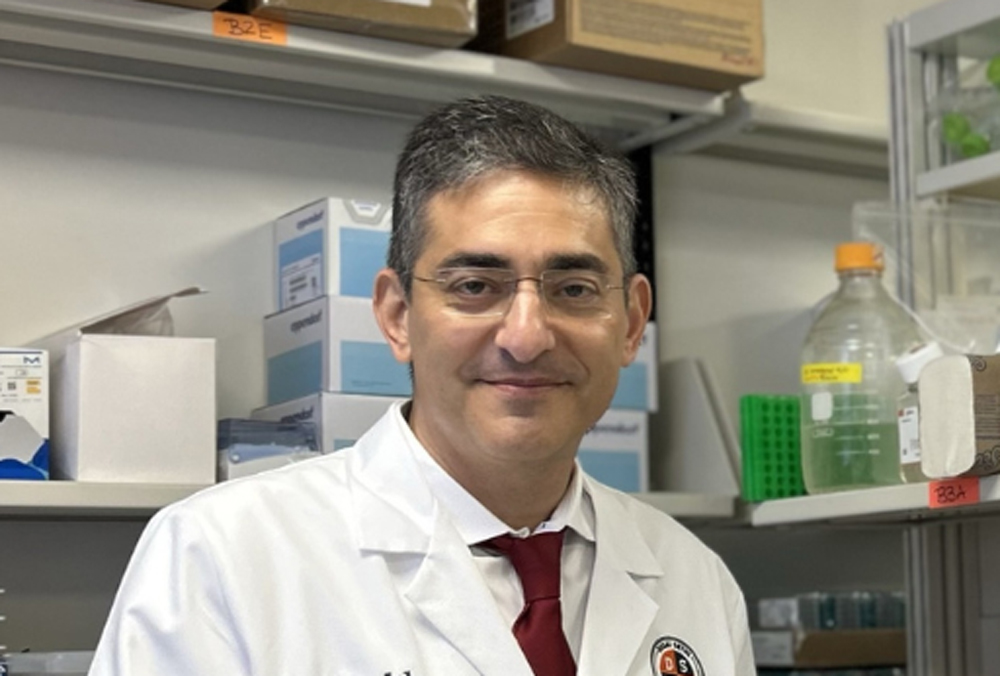
“Immune cells actually infiltrate the heart and impact the cardiac muscle,” said Pilar Alcaide, Ph.D., vice chair of the Department of Microbiology and Immunology. “These cells generate good fibrosis — scarring — and that protects the heart early on; however, over time, they induce excessive fibrosis, making the cardiac muscle stiff and unable to contract efficiently, which results in heart failure.”
To complicate matters, the immune response changes based on the initial insult the heart senses: a heart attack, hypertension, valvular disease or cancer chemotherapy toxic to the heart. Macrophages come in to repair the damage and ultimately bring in T cells, which can continuously weaken the heart, a process called adverse remodeling.
“Heart failure is not a disease so much as syndrome with many different causes. Those variations make different types of heart failure immunologically distinct. That understanding will have to drive how therapies are developed.”
Pilar Alcaide, Ph.D.
While these heart failure–driving mechanisms are becoming more apparent, therapeutic development is far less clear-cut. Researchers must walk a narrow path: modulate the inflammation that is fueling heart failure without diminishing the initial immune response essential for patient recovery.
“There’s a lot of research about tweaking this response — how we can manipulate these good T cells and prevent bad inflammation,” Dr. Alcaide said. “The ultimate goal would be to understand what those T cells are responding to so we can either prevent or immunize against heart failure.”
Still, these will not be one-size-fits-all treatments. As noted, the immune response is often dictated by the original cardiovascular issue. Clinicians will have to fully understand each patient’s disease to prescribe the most targeted interventions.
“When we get to the point where we can develop therapies, they’re going to have to be highly personalized,” Dr. Alcaide said. “Heart failure is not a disease so much as syndrome with many different causes. Those variations make different types of heart failure immunologically distinct. That understanding will have to drive how therapies are developed.”