World-class Aortic Care Comes to South Florida

World-class Aortic Care Comes to South Florida
From its origin at the left ventricle, the aorta sends blood throughout the body, separating into multiple branches to feed the brain, upper and lower extremities, liver, kidneys and other organs.
Because so much blood is being pumped through it, the aorta is under a lot of pressure, and this can lead to serious, sometimes deadly, consequences. Bulges or enlarged areas of the aorta, known as aneurysms, can rupture, leading to massive blood loss. They also increase the risk for acute aortic dissections, which are life-threatening tears in the aorta’s inner layer. To repair damaged aortas and valves, UHealth recently launched the Comprehensive Aortic Center.
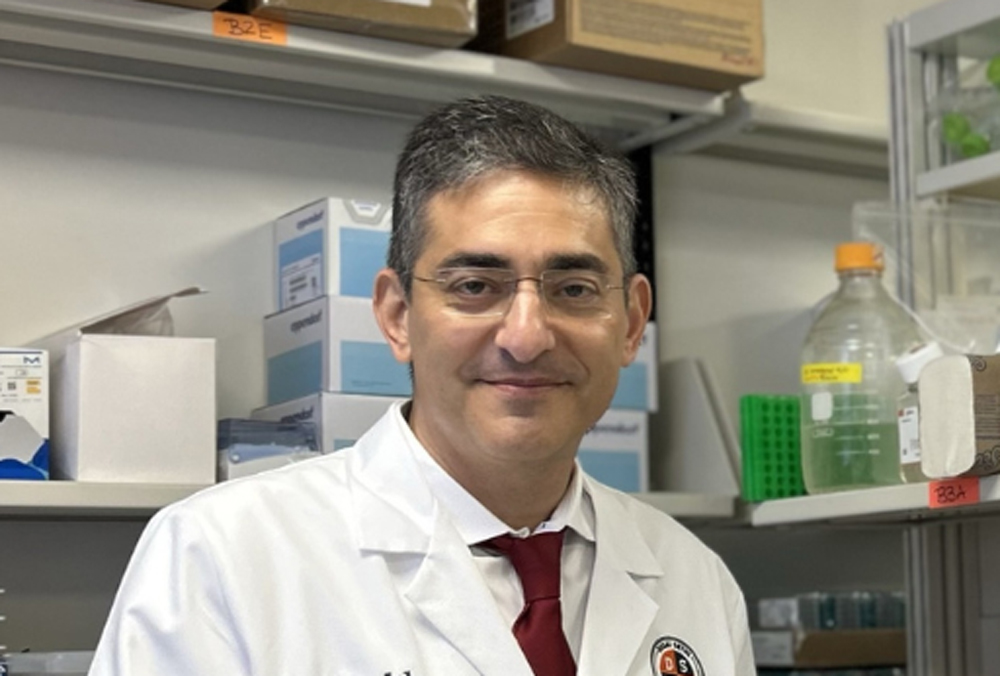
“To take care of these patients, we need people who deal with aortic problems on a daily basis,” said Jean Panneton, M.D., a vascular surgeon and co-director of the Comprehensive Aortic Center. “Most surgeons have little experience addressing complex aneurysms or aortic dissections, and experience really matters.”
Beyond an experienced multidisciplinary team, aortic care requires specific technology. For example, specialists must often navigate beyond the aorta itself to small branch arteries. The UHealth team carefully navigates this intricate anatomy using a technique called fusion imaging, which combines a patient’s computed tomography angiogram with real-time imaging during the procedure. In addition, a variety of advanced instruments deliver less-invasive repairs.
“Now we have devices that allow us to go all the way to the aortic valve and maintain blood perfusion in the brain and arms,” Dr. Panneton said. “The technology has evolved from purely open surgical procedures 25 years ago to now being able to make these repairs in a minimally invasive way, without having to cut the sternum open.”
“Most surgeons have little experience addressing complex aneurysms or aortic dissections, and experience really matters.”
Jean Panneton, M.D.
Integrated Care for Genetic Aortic Conditions
In addition to emergency and elective procedures to correct aneurysms and dissections, the team also helps patients with genetic conditions, such as Marfan and Loeys-Dietz syndromes — which increase aneurysm risks and require lifelong monitoring — and bicuspid aortic valves (two flaps instead of three), a common genetic condition that affects around 2% of the population.
“We actively participate in and support the mission of The Marfan Foundation and care for complex cases that previously had limited or no treatment options available in Florida,” said Ciro Amodio, M.D., co-director of the Comprehensive Aortic Center.
The center gives these patients access to a fully integrated, multidisciplinary team in a single institution. This includes aortic and cardiothoracic surgeons, vascular surgeons, cardiologists, cardiac imaging specialists, geneticists, anesthesiologists, and specialized nursing and rehabilitation staff. Care for genetic conditions that affect the aorta is coordinated across all stages — from advanced imaging and genetic screening to operative planning, complex surgical or endovascular interventions, and lifelong surveillance.
“There are many therapeutic options for these patients that, unfortunately, have not always been available for them in this region,” said Juan Pablo Umaña, M.D., chief of UHealth’s Cardiothoracic Surgery Division and co-director of the center. “As a consequence, they have had to leave the state to find centers that can provide that care.”
Educational Outreach
In addition to correcting serious aortic conditions, the team conducts intensive outreach to educate fellow clinicians about the dangers of aortic disease, particularly acute dissections. Emergency room physicians, for example, are trained to look for heart attacks, but don’t always consider dissections.
“We talk to emergency department doctors, cardiologists, and others who see patients with chest pain,” Dr. Amodio said. “We tell them, don’t always assume it’s a heart attack — think about the aorta as well. An early and accurate diagnosis can save lives.”
These are important messages and the team is eager to spread the word. “We have unique expertise and technology that we can bring to these problems,” Dr. Umaña said. “We always want to do the right operation, at the right time, the first time around.”